.webp)

Gas turbine procurement is now the slowest step in building new power. A gas turbine ordered today would not start running until 2031 on average.
That date sets the schedule for every project built around a turbine. For AI data center builders and power plant developers, it determines when the lights come on. For investors, it decides whether the returns in your model survive contact with reality.
What types of gas turbines are in demand right now?
Every major class of gas turbine is in short supply in 2026. The classes differ in wait time and what you sacrifice for speed.
Heavy-duty frame turbines
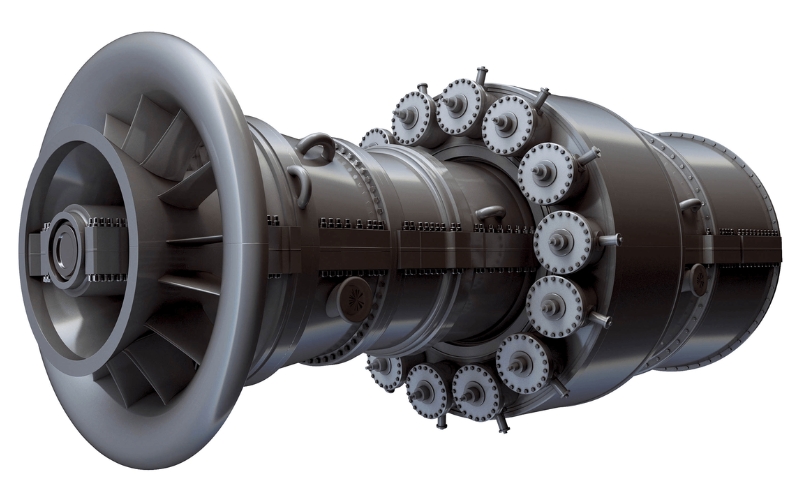
Heavy-duty frame turbines are the large H-class and J-class machines that anchor combined-cycle plants. Megawatt for megawatt, these machines dominated 2025. Utilities want them because nothing beats their efficiency at scale. Think of them as the freight trains of power generation: slow to arrive but unbeatable once running.
Aeroderivative turbines
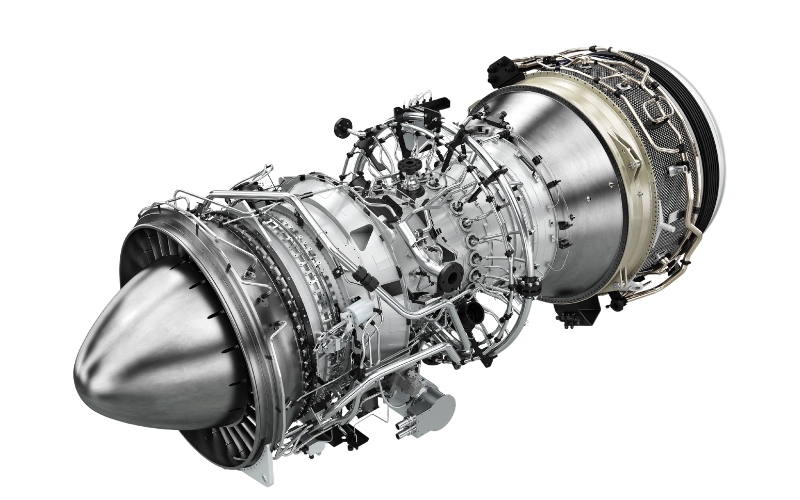
Aeroderivative turbines are jet engines adapted to generate electricity, producing around 25 to 50 MW. It ramps quickly and usually ships within one to two years.
That speed makes them a favorite for AI campuses that can't wait for a frame turbine. GE Vernova booked 61 aeroderivative units in the second quarter of 2026 alone, alongside 52 heavy-duty units.
Industrial and small gas turbines
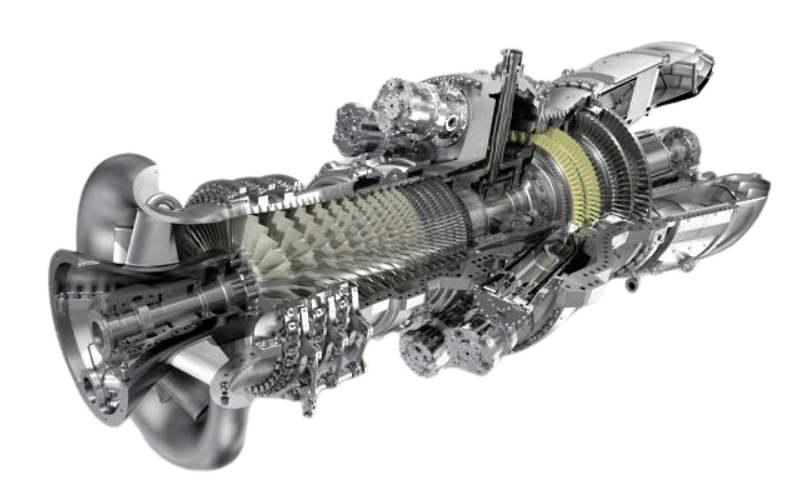
Small and industrial turbines are the quiet volume winners of this cycle. In 2025, 70% of turbines sold were under 100 MW, with especially strong growth in the 3 to 20 MW range.
Units between 30 and 100 MW are now a battleground. Data center developers want the same peaking machines utilities have relied on for decades. That tug-of-war is one of the least discussed pressures on gas turbine procurement right now.
How the main options compare
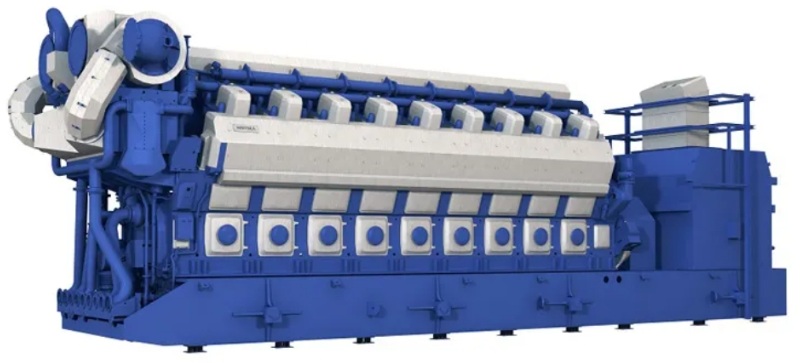
Reciprocating gas engines aren't turbines, but they compete for the same projects.
The table below shows how the four main on-site options compare on size, timing and cost.
How big is the backlog, and how long are gas turbine lead times?
The three largest manufacturers hold more than 200 GW of combined backlog and reservations. New heavy-duty orders are landing in delivery slots at the end of the decade. Each company counts its book differently, so read the headline numbers carefully.
GE Vernova reported 116 GW of gas equipment backlog and slot reservation agreements at the end of June 2026. CEO Scott Strazik said the company is already booking 2031 delivery slots. GE Vernova expects to have at least 125 GW under contract by the end of 2026.
Siemens Energy closed its June quarter with a firm gas turbine backlog of 69 GW, and executives put lead times at three years or more. Mitsubishi Heavy Industries reported a 35 GW large-frame backlog in August 2026.
The waits have stretched fast. According to the Department of Energy, a gas turbine wait that used to be two to three years can now stretch to seven. Even smaller turbines now take 18 to 36 months.
Gas turbine lead times for data centers are where the pain is sharpest. A data center can be built in 12 to 24 months, but heavy-duty turbines and combined-cycle plants take 36 to 84 months.
How fast are gas turbine orders growing?
Global gas turbine orders more than doubled in 2025. The Electric Power Research Institute counted 846 turbines totaling 100.3 GW, up from 399 units and 58.2 GW in 2024.
The momentum carried into 2026. JPMorgan analysts counted about 38 GW of orders in the April to June quarter, a record quarter that was 29% above the first quarter and 71% above a year earlier. Siemens Energy led with about 12.5 GW, followed by GE Vernova at 11.3 GW and Mitsubishi Heavy Industries at 5.3 GW.
Orders are running well ahead of what factories can build. Wood Mackenzie puts global orders at 110 GW at the end of 2025, against worldwide manufacturing capacity of only 60 to 70 GW a year. It sees 2026 as the peak for orders, with developers scrambling to lock in turbines for the 63 GW of gas capacity due between 2026 and 2030.
What does that mean for your project? Any order you place now joins a queue that's already bigger than a full year of global production.
Where is gas turbine demand coming from?
The United States leads today, and the Middle East and Asia are lining up as the next wave. JPMorgan's analysis put the U.S. at nearly half of all second-quarter 2026 orders.
North America
In 2025, U.S. buyers ordered 427 turbines totaling 43.1 GW. GE Vernova says about 20% of its gas customers are now data center companies, and the other 80% are traditional buyers such as utilities.
That mix matters. Data center money moves fast and pays for speed, pushing slower-moving utility buyers further back in line.
Middle East
S&P Global Energy CERA thinks the Middle East could eventually outweigh North America as a source of turbine demand. It projects the region's gas-fired capacity will grow from 385 GW in 2025 to 530 GW by 2035.
Gulf buyers are splitting their bets. Saudi tenders lean on combined-cycle plants to get power online fast, while Oman and Qatar buy open-cycle turbines to keep their grids stable. S&P Global ranks 2025 as the second-strongest order year on record, behind only the merchant power boom of the early 2000s.
Asia and Europe
Siemens Energy tied its record June-quarter gas orders to U.S. data centers and new power plants in the Middle East and Asia. CEO Christian Bruch said heavy U.S. buying pushed other markets to delay decisions. Those Asian and Middle Eastern projects are now coming back.
Japan is active too. Mitsubishi Heavy Industries booked 10 large-frame orders in its fiscal first quarter, six for Japan and four for the United States. In Europe, Siemens Energy flagged new-unit demand from Poland and Turkey, alongside Taiwan and the U.S., in its first fiscal quarter of 2026.
Shortages are already visible outside the U.S. Bloomberg reported that parts of Southeast Asia can't get enough turbines to deliver the new capacity they've planned.
What is driving demand for gas turbines?
Three forces hit at once: AI data centers, broad load growth, and the need for firm power alongside renewables. Unlike the early-2000s boom, today's demand doesn't depend on a single sector.
AI and data center power demand
The International Energy Agency expects global data center electricity use to climb to roughly 945 TWh by 2030, more than twice the 415 TWh used in 2024. In the U.S., data centers account for nearly half of electricity demand growth through 2030.
Hyperscalers are spending accordingly. Five largest cloud and AI companies are estimated to spend $745 billion to $775 billion on capital expenditure by the end of 2026. More than 130 GW of on-site energy resources have been proposed for U.S. data center projects, and gas makes up over 80% of that pipeline.
That's why gas turbine lead times for data centers carry high stakes. The estimated cost of idle graphics processor clusters is $3 billion to $5 billion a year in depreciation and lost revenue.
Load growth from electrification and reshoring
Data centers drive most of that increase, but they are not alone. The Department of Energy also points to reshoring of U.S. manufacturing and electrification of buildings, transport, and industry. The North American Electric Reliability Corporation now forecasts 224 GW of summer peak demand growth over the next 10 years. That's 69% more than its prior forecast, and winter peak growth is even higher at 246 GW.
Grid reliability and firming for renewables
Renewables dominate new U.S. capacity, which raises the value of dispatchable backup. Developers plan a record 86 GW of utility-scale capacity for 2026, and solar, batteries and wind make up 93% of it.
Solar and batteries go up quickly, but a hyperscale campus needs power around the clock. Reaching 99.99% uptime on solar and batteries alone takes much engineering and capital. Gas turbines fill that gap, which is why utilities keep ordering them.
What is choking gas turbine supply?
The engineering is solved. What is missing is enough factory floor, foundry time, and skilled labor to build the machines.
Three manufacturers control the heavy-duty market
GE Vernova, Siemens Energy, and Mitsubishi Heavy Industries account for more than three-quarters of the world's installed heavy-duty base, according to S&P Global data cited by Turbomachinery International. When three companies control supply, you do not negotiate delivery dates. You take the slot they offer.
But new entrants are circling. South Korea's Doosan Enerbility now has 12 turbines under contract for U.S. delivery, including units for xAI's Colossus expansion.
Manufacturing capacity limits
Manufacturers are expanding but carefully. The turbine market crashed after past booms, and executives have not forgotten it. Mitsubishi Heavy Industries plans to double its large-turbine capacity by fiscal 2030 compared with 2024 levels.
Labor is the other brake. Participants in an Oak Ridge National Laboratory workshop flagged skilled-worker shortages alongside slow casting and forging processes. Every turbine is built to order, using heat-resistant alloys and tight-tolerance machining that cannot be rushed.
Critical components
Rotor forgings and hot-section blades are the tightest links. The squeeze is so tight that, according to researchers speaking with POWER magazine, some large frame units have left the factory missing rotors or blades. Crews fit those parts at the site once they arrive. Heavy reliance on nickel-based superalloys, cobalt, and yttrium also causes bottlenecks.
Competition with aerospace for parts
Jet engines and power turbines draw on the same foundries. The Oak Ridge National Laboratory workshop cited the large backlog of turbines for commercial aviation as direct pressure on supply.
That competition turned into dealmaking in September 2026. GE Aerospace agreed to acquire Consolidated Precision Products for $11.75 billion to secure more castings capacity.
Maintenance and spare parts delays
The shortage doesn't stop at new units. The same blade and forging constraints affect the parts your existing fleet needs for scheduled outages.
Operators are squeezing more life out of old machines. More operators are fixing and reusing worn components instead of waiting on new ones, while stretching the life and output of existing units. The Energy Information Administration notes that retirements keep slipping, including Eddystone Units 3 and 4, which stayed online into 2026 under a Department of Energy emergency order.
The Oak Ridge National Laboratory workshop also flagged a growing repair burden from turbines running past their design life. The fleet you already own may be your most valuable asset.
What does the backlog cost builders, utilities, and investors?
The backlog is repricing power across the board. Equipment and plant costs are up, capacity prices are up, and some projects do not get built.
Equipment and plant prices
Wood Mackenzie expects turbine prices to reach $600/kW by the end of 2027, a 195% increase since 2019. Turbines make up 20% to 30% of combined-cycle project costs, so that jump flows directly into your capital budget.
Recent deals show the same squeeze. BNP Paribas analysts estimated GE Vernova's pricing at about $790/kW for heavy-duty turbines and $1,800/kW for aeroderivatives. A paper in the journal Engineering puts new gas plant costs at $2,600 to $2,800/kW, more than three times the roughly $800/kW of 2021.
It gets worse further out. JPMorgan analysts expect a combined-cycle turbine delivered in 2031 to cost three times as much as one delivered last year.
Slot reservations and deposits
Money changes hands years before any steel arrives. Speakers at the Oak Ridge National Laboratory workshop said buyers often have to put down deposits in the millions just to hold a place in line. More than half of GE Vernova's 116 GW book consists of slot reservations rather than firm orders.
For investors, that signal cuts both ways. Reservations give manufacturers revenue visibility but also tie up developer capital in positions that may never convert to firm orders.
Power prices and capacity markets
Scarcity is showing up in wholesale markets. PJM's 2027-2028 capacity auction cleared at the $333.44 per megawatt-day cap and still fell 6,623 MW short of its reserve target. Two years earlier, that auction's price was $28.92.
Behind-the-meter power costs more too. On-site gas generation for data centers may cost $100 to $165 per MWh compared with $90 to $95 for grid power.
Project delays and cancellations
Some projects simply die in the queue. In Texas, roughly a third of the capacity proposed for the Texas Energy Fund loan program had dropped out by November 2025 across at least eight projects. Engie pulled two of them, citing equipment constraints.
How many more projects are sitting on a turbine assumption that will not hold? If your financial model assumes a 2028 turbine delivery without a signed slot, you should stress-test it now.
How can you skip the gas turbine queue?
You skip the queue by sourcing secondary equipment for near-term power. Zero-hour, low-hour, and preserved units left idle by canceled projects are drawing serious interest from buyers who can't wait until 2031. The Acquire.fi Gas Turbine Order Book works this gap and has already mapped roughly 3.4 GW of equipment and sites.
The Acquire.fi Gas Turbine Order Book works on both the buy-side and sell-side secondary transactions of 50 Hz and 60 Hz equipment. Posting a requirement or listing an asset is free, and the desk responds within one business day. If you need five to ten identical units, the desk pools them from several owners so you are not hunting one machine at a time.
Sources
- 5-year waits and rising costs: How demand is redefining the gas turbine market - https://www.utilitydive.com/news/5-year-waits-and-rising-costs-how-demand-is-redefining-the-gas-turbine-mar/813385/
- GE Vernova reports second quarter 2026 financial results and raises 2026 financial guidance - https://www.gevernova.com/news/press-releases/ge-vernova-reports-second-quarter-2026-financial-results-raises-2026-financial
- GE Vernova gas turbine backlog climbs to 116 GW - https://www.utilitydive.com/news/ge-vernova-gas-turbine-backlog-climbs-to-116-gw/826039/
- Siemens' gas turbine backlog nears 70 GW as company expands manufacturing - https://www.utilitydive.com/news/siemens-gas-turbine-backlog-nears-70-gw-as-company-expands-manufacturing/827390/
- Mitsubishi's large-frame gas turbine backlog reaches 35 GW - https://www.utilitydive.com/news/mitsubishi-gas-turbine-backlog-earnings/827761/
- DOE Seeks Input on Gas Turbine Manufacturing to Increase Domestic Energy Production - https://www.energy.gov/node/4855339
- Global Gas Turbine Orders Soar to Record Quarter, JPMorgan Says - https://www.energyconnects.com/news/gas-lng/2026/august/global-gas-turbine-orders-soar-to-record-quarter-jpmorgan-says/
- Gas turbine prices soar 195% as market faces supply-demand crisis - https://www.woodmac.com/press-releases/gas-turbine-prices-soar-195-as-market-faces-supply-demand-crisis/
- Middle East gas-fired capacity poised to reach 530 GW by 2035: S&P - https://www.arabnews.com/node/2655790/business-economy
- Earnings Release Q3 FY 2026 April 1 to June 30, 2026 (Siemens Energy) - https://assets.siemens-energy.com/dam/d0147174-31a9-4a78-b062-b49d00428fc4/earnings-release-q3-fy2026-en-pdf_Original%20file.pdf
- Siemens Energy boasts record gas turbine orders in response to demand boom - https://www.enlit.world/library/siemens-energy-boasts-record-gas-turbine-orders-in-response-to-demand-boom
- Executive summary – Energy and AI (International Energy Agency) - https://www.iea.org/reports/energy-and-ai/executive-summary
- Long-Term Reliability Assessments (North American Electric Reliability Corporation) - https://www.nerc.com/our-work/assessments/long-term-reliability-assessments
- New U.S. electric generating capacity expected to reach a record high in 2026 - https://www.eia.gov/todayinenergy/detail.php?id=67205
- The Casting Bottleneck Behind the Gas Turbine Shortage Just Became a Battleground - https://www.turbomachinerymag.com/view/ge-aerospace-cpp-acquisition-spacex-turbine-blade-foundry
- Mitsubishi Heavy to invest over $618m in Japan, US gas turbine operations - https://asia.nikkei.com/business/energy/mitsubishi-heavy-to-invest-over-618m-in-japan-us-gas-turbine-operations
- ORNL workshop tackles gas turbine supply chain crisis - https://www.ornl.gov/organization-news/ornl-workshop-tackles-gas-turbine-supply-chain-crisis
- Gas Turbine Supply Chain Bottlenecks Could Reshape the Generation Mix in 2030 and Beyond - https://www.powermag.com/gas-turbine-supply-chain-bottlenecks-could-reshape-the-generation-mix-in-2030-and-beyond/
- Howmet Aerospace Inc. - Form 8-K - FY2026 (Exhibit 99.1) - https://www.sec.gov/Archives/edgar/data/4281/000110465926025539/tm268347d1_ex99-1.htm
- GE Aerospace to Acquire Consolidated Precision Products (CPP), Expanding Mission-Critical Castings Capacity - https://www.geaerospace.com/news/press-releases/ge-aerospace-acquire-consolidated-precision-products-cpp-expanding-mission-critical
- Retirement delays of U.S. electric generating capacity may continue in 2026 - https://www.eia.gov/todayinenergy/detail.php?id=67206
- Gas Turbine Shortage Could Derail Data Center Expansion - https://www.engineering.org.cn/engi/EN/10.1016/j.eng.2026.02.014
- How the Data Center Boom Brought Down the Texas Energy Fund - https://www.latitudemedia.com/news/how-the-data-center-boom-brought-down-the-texas-energy-fund




.webp)