.webp)

Key takeaways:
- The GE LM6000 gas turbine delivers about 57 MW at roughly 41% efficiency, starts in about 5 minutes, and posts over 99% start and operating reliability. That suits the swinging loads of AI data centers and renewable-heavy grids.
- GE Vernova's gas backlog and slot reservations reached 116 GW in the second quarter of 2026. Units will be delivered in 2029.
- Turbine price forecast is about $600 per kW by the end of 2027. The 2026 benchmark puts a new gas peaking plant at $1,100 to $1,650 per kW installed.
- The LM6000 starts faster than the Siemens Energy SGT-A65 and Mitsubishi Power FT8 and FT4000, and its fleet of about 60 million operating hours dwarfs the SGT-A65's 3.9 million.
- The Acquire.Fi Gas Turbine Order Book matches buyers with idle, low-hour, and preserved LM6000 units that never reach an OEM backlog.
The GE LM6000 gas turbine remains the quickest proven way to deliver about 50 MW of firm, dispatchable power on a single site. In 2026 it has also become one of the hardest machines in the energy business to obtain. GE Vernova has sold over 1,500 units, yet every new order competes with a turbine backlog running into the next decade.
Why should you care? Maybe you build AI data centers or run a utility peaking fleet. Maybe you finance one of them. Either way, the LM6000 sits right in the middle of your time-to-power problem.
Pick the right variant and sourcing route, and you energize years earlier. Pick wrong, and you pay for idle GPUs and missed capacity payments while waiting in queue.
What is the GE LM6000 gas turbine?
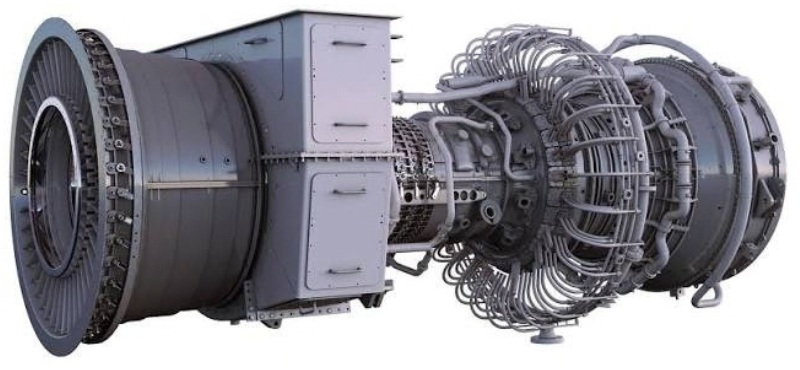
The GE LM6000 gas turbine is an aeroderivative gas turbine that produces about 57 MW in simple cycle at roughly 41% efficiency. GE Vernova builds it around the core of the CF6-80C2 turbofan, the engine family that powered widebody airliners such as the Boeing 767. The fan that pushes a plane forward is gone, and the spinning shaft turns an electric generator instead.
Why the jet engine heritage matters to you
Aviation engines are built to start, throttle up and shut down many times a day. This trait carries over to power generation. GE Vernova rates the LM6000 gas turbine at a 5-minute start to full power, over 99% start and operating reliability, and over 98% availability.
The point is simple. A heavy industrial frame turbine runs flat out for weeks. The LM6000 is built to chase a load that changes every few minutes, exactly what AI training clusters and renewable-heavy grids do to a power plant.
What it burns
Natural gas is the default fuel. The LM6000 also runs on diesel, LPG, ethanol, isopentane, and coke oven gas. GE Vernova describes the platform as 100% hydrogen capable, and it can switch fuels without dropping power. This means a backup fuel tank on site can keep the lights on during a pipeline outage.
Where is the GE LM6000 gas turbine used today?
The GE LM6000 gas turbine works in four main roles. It powers AI data centers and utility peakers, supplies industrial combined heat and power, and anchors early hydrogen projects. The common thread is fast, flexible output in a 50 MW block.
AI data centers
Aeroderivatives have moved from backup duty to the center of AI data center power planning. Builders install them on site to carry the load during the years it takes the local utility to finish a grid hookup. Regulators now treat long-running turbine fleets as real generation assets, not temporary backup.
GE Vernova pitches the platform for exactly this job. Its data center power page says fast-start aeroderivatives can restore power within five minutes of a grid disturbance, which lines up with Tier III and Tier IV reliability targets.
How does that play out on your site? A 300 MW data center can phase in six LM6000 units as GPU stacks come online, then shift them to backup once the grid arrives.
Utility peaking and grid firming
Utilities are reordering the LM6000 in volume, mostly as the LM6000VELOX package. A few 2026 examples show the pattern:
- Hawaiian Electric: In July 2026, the utility ordered six LM6000VELOX units for its Waiau Power Plant on O'ahu. They replace steam units aged 58 to 67 years and should add over 250 MW of firm power, with the first two units online in 2029.
- Lincoln Electric System: In February 2026, the Nebraska utility signed for two LM6000VELOX packages at Terry Bundy Generating Station, adding about 100 MW by 2029.
- Tennessee Valley Authority: TVA's Johnsonville Aeroderivative Plant hosts the first LM6000VELOX package with dry low emissions (DLE) combustion.
- SSE in Ireland: A 150 MW reserve plant at Tarbert uses the LM6000VELOX to keep the Irish grid stable.
Notice the 2029 dates. Orders signed in 2026 deliver in 2029, showing how deep the queue already runs.
Industrial heat and power
The LM6000 has a long record in combined heat and power (CHP). Thermal Energy Corporation (TECO) uses one to keep Houston's Texas Medical Center running, home to the largest district cooling system in North America. In Germany, the Freimann plant pairs two LM6000 units with heat storage so it can react to gas and power prices on short notice.
Hydrogen
The four LM6000VELOX units at the Whyalla hydrogen power plant in South Australia are designed to run on 100% renewable hydrogen, with commissioning slated to start in early 2026. Closer to home, a New York Power Authority hydrogen blending study on an LM6000 cut CO2 emissions by 14%. If your board has a decarbonization target, that track record gives you a credible upgrade path.
How did the LM6000 evolve?
The first LM6000 entered commercial service in October 1992, with the first dry low emissions combustor going into service two years later in Ghent, Belgium.
The launch unit ran at the Ottawa Health Services facility in Canada. By January 2011, GE had shipped its 1,000th LM6000 and was validating the next-generation PG and PH models.
Here's the timeline in short form:
- 1992: The first LM6000 goes commercial, built on the CF6-80C2 jet engine core.
- 1994: Dry low-emissions combustion debuts, cutting NOx without water injection.
- 2010 to 2011: The PG and PH models move to the larger CF6-80E engine core.
- 2023: GE introduces the LM6000VELOX package to shrink installation time.
- 2024: Dominion Energy's Bushy Park station in South Carolina becomes the first LM6000VELOX in commercial operation.
- 2026: The installed fleet passes roughly 60 million operating hours and 1,500 units sold.
Why does a 34-year history matter to an investor? Every operating hour builds a parts, repair, and know-how network you can tap today, lowering the risk of buying new or refurbished units.
Which LM6000 variants are available now?
GE Vernova's current new-build lineup centers on two LM6000VELOX ratings: the PC Sprint and the PF+ Sprint. Both come with either a DLE combustor or a single annular combustor (SAC) with water injection, for 50 Hz or 60 Hz grids.
On the secondary market, you'll see a wider family. These are the model letters you'll run into most:
- LM6000 PC: The single annular combustor workhorse, which uses water injection to control NOx.
- LM6000 PD and PF: The dry low emissions versions of the original CF6-80C2-based design.
- LM6000 PG: A higher-output SAC model built on the CF6-80E engine core.
- LM6000 PH: The DLE counterpart of the PG, also on the CF6-80E core.
- LM6000 PF+: The latest family member, aimed at flexible cogeneration on gas and liquid fuels.
SPRINT, short for spray intercooling, is an option across the range rather than a separate model. It sprays atomized water into the compressor to cool the air, raising mass flow and output on hot days. If your site is in Texas or the Gulf, SPRINT is basically non-negotiable.
Which one should you pick? Choose DLE if water is scarce or expensive at your site. Choose SAC with water injection if you can supply treated water, and your air permit allows it.
What are the GE LM6000 specifications?
The headline GE LM6000 specifications for a new unit are 56.9 MW net output and 41.0% net efficiency for the LM6000VELOX PF+ Sprint at ISO conditions. The smaller PC Sprint rating delivers 51.1 MW at 39.7%.
How the machine is built
The LM6000 is a two-spool machine. It pairs a 5-stage low-pressure compressor and a 14-stage high-pressure compressor with an annular combustor. A 2-stage high-pressure turbine and a 5-stage low-pressure turbine follow.
Here's the clever part. The shaft that links the low-pressure compressor and turbine also drives the generator directly. That removes the separate power turbine many competitors need, and GE Vernova credits the simple two-spool layout for lower overall maintenance costs.
Specs at a glance
The table below compares the two current LM6000VELOX ratings. GE Vernova quotes these at ISO conditions on natural gas, with inlet and exhaust losses included and balance of plant excluded.
What the numbers mean for your operation
Speed is the standout spec. GE Vernova rates its aeroderivatives at about 50 MW per minute ramp rate, versus roughly 5 MW per minute for a typical medium-speed reciprocating engine. When an AI training job spikes or a cloud bank rolls over a solar farm, that gap decides whether your frequency holds.
Efficiency also climbs past 50% once you add a heat recovery steam generator in combined cycle. Controls run on GE Vernova's Mark VIe platform, which supports remote diagnostics and built-in cybersecurity.
How is the LM6000 packaged and configured in a plant?
GE Vernova's current LM6000 offering is the LM6000VELOX, a modular package arriving mostly built from the factory. The goal is to cut as much as 40% off the field schedule. In practice, that can mean around 4,000 fewer labor hours and roughly 90 days from installation to commissioning, though your site conditions will affect that number.
Why does that matter? Construction labor is one of the scarcest inputs on any 2026 power project. Fewer field hours mean fewer crews to hire and less schedule risk.
Plant layouts you can choose
The package fits three standard plant layouts. Each one serves a different business model:
- Simple cycle: One or more turbines exhaust straight to a stack. This is the fastest build and the usual pick for peakers and data center bridging power.
- Combined cycle 1x1: One turbine feeds one heat recovery steam generator and steam turbine, lifting efficiency above 50%.
- Combined cycle 2x1: Two turbines share one steam turbine, which spreads steam plant cost over more output.
Combined heat and power is the fourth option. Here the exhaust heat makes steam or chilled water for a hospital, data center, or factory instead of more electricity.
Emissions controls and the 2026 EPA rule
Emissions hardware sits downstream of the turbine. Dominion Energy's Bushy Park unit, for example, pairs DLE combustion with selective catalytic reduction (SCR) and an oxidation catalyst, so it needs no water injection.
The rules shifted this year. The EPA's final NSPS subpart KKKKa rule, effective January 15, 2026, sets new NOx standards for turbines built after December 13, 2024. It names combustion controls as the best system of emission reduction for most new turbines and creates a separate subcategory for temporary turbines.
That temporary subcategory is a big deal for bridging power. If your plan is to run LM6000 units for five years and then move them, talk to your permitting counsel before you sign a purchase agreement.
How reliable is the LM6000, and can you still get parts?
The LM6000 delivers over 99% start and operating reliability and over 98% availability, according to GE Vernova. Parts and repair capacity are broad because the fleet is huge: roughly 60 million operating hours across more than 1,500 units.
Why maintenance is fast
The aero design lets you swap whole modules or the entire engine instead of rebuilding it in place. GE Vernova offers outages as short as two days through module and engine exchanges, plus engine leasing while yours is in the shop.
For a data center operator, a two-day outage on one of six units is a non-event. A heavy-frame turbine can't trade its whole core on a truck like that.
Who services the fleet
You aren't locked into one repair shop. Independent shops compete for LM6000 work alongside GE Vernova's own service network.
In July 2026, MTU Maintenance signed an exclusive five-year contract with Petrobras for LM6000 maintenance, repair and overhaul. MTU says it has completed over 1,700 shop visits on LM-series turbines and is building capacity for a 30% rise in shop visit volume.
The deal covers 10 engines and three hot sections across four Brazilian sites. Petrobras runs roughly 40 LM6000 units and 150 LM2500 units, one of the larger aeroderivative fleets in Latin America.
Where parts get tight
New-build demand strains the same factories and suppliers that provide spare parts. Budget for longer repair turnarounds than five years ago. A spare engine or lease agreement is cheap insurance when your load can't go down.
What does it cost to run and maintain an LM6000?
A new gas peaking plant carries fixed O&M of $10 to $17 per kW-year and variable O&M of $3.50 to $5.00 per MWh, according to Lazard's July 2026 Levelized Cost of Energy+ report. Those are generic peaker figures, not LM6000 quotes, but they're the benchmark your lenders will use.
Fixed costs per unit
Apply Lazard's range to a 56.9 MW LM6000VELOX PF+ Sprint. You get about $0.57 million to $0.97 million a year in fixed O&M before fuel costs. For a six-unit operation, that's about $3.4 million to $5.8 million a year.
Fuel is the real swing factor
Fuel is where the LM6000 earns its keep. Lazard models peakers at a heat rate of 10,275 to 11,175 Btu/kWh with gas at $3.45 per MMBtu, which works out to about $35.40 to $38.60 per MWh in fuel.
The PF+ Sprint's 8,328 Btu/kWh heat rate drops that to about $28.70 per MWh at the same gas price. That's a gap of roughly $6.70 to $9.80 on every megawatt-hour.
Now scale it. Run one unit at 15% capacity factor as a peaker, and you save about $0.5 million to $0.7 million a year in fuel versus the generic benchmark. Run it at 80% as data center bridging power and the unit burns about $11.5 million of gas a year, so every efficiency point matters.
Maintenance strategy
GE Vernova offers long-term service agreements (LTSAs) for the LM6000, and independent shops such as MTU sign multi-year deals too. A multi-year contract turns lumpy overhaul bills into a cost you can underwrite.
Your duty cycle drives the bill. Many starts and stops wear parts differently than steady running, so model both before choosing a contract structure. Many buyers of refurbished units get burned here: they price the engine but forget the next overhaul.
How does the GE LM6000 gas turbine compare with the Siemens Energy SGT-A65 and Mitsubishi Power FT8 and FT4000?
The GE LM6000 gas turbine starts fastest of the four, while the Siemens Energy SGT-A65 offers slightly more output per unit and the Mitsubishi Power FT4000 offers the biggest single package. The FT8 is the small, mobile option of the group.
One caution before you read the numbers. Each maker quotes on a different basis: GE Vernova gives net output, Siemens Energy gives gross output, and Mitsubishi Power gives an ISO base rating. Gross figures are slightly higher than net, so do not compare them one for one.
Output, efficiency and start time
The first table covers the numbers most buyers screen on. Values come from each maker's product page, at ISO conditions on natural gas.
Design, emissions and maintenance
The second table covers what drives your long-term operating risk.
Which one fits your project?
Pick the LM6000 when start speed and fleet depth matter most. GE Vernova counts about 60 million operating hours on it, while Siemens Energy's SGT-A65 has logged over 3.9 million hours across more than 115 units sold.
The SGT-A65 is surprisingly good at part load thanks to its three-shaft design. That makes it a strong fit for behind-the-meter sites where demand swings all day.
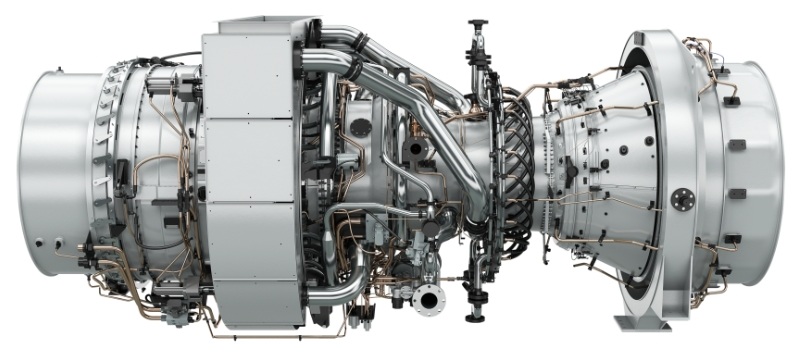
The Mitsubishi Power FT8 MOBILEPAC wins on mobility. Over 150 units have shipped since 2004, and the package can run on 50 Hz or 60 Hz, which makes it handy for temporary or emergency power.
The Mitsubishi Power FT4000 SWIFTPAC is the heavyweight. At up to 140 MW from a twin-engine package, it suits utilities that want fewer, bigger blocks.
How does the LM6000 compare with the LM2500, LMS100 and LM9000?
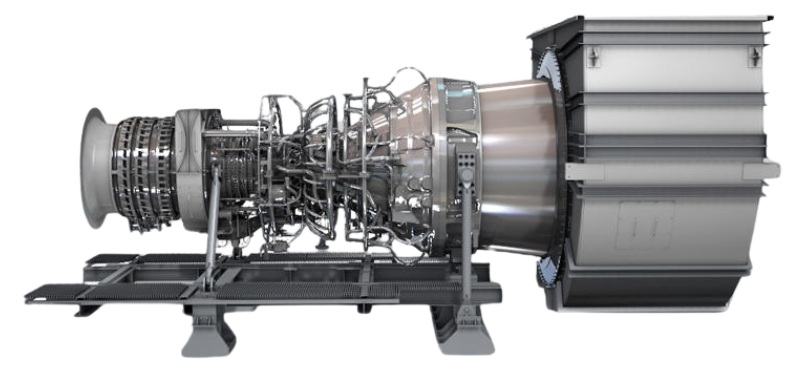
The LM6000 is the middle child of the family: bigger than the roughly 36 MW LM2500, about half the size of the roughly 113 MW LMS100, and a step below the 70 MW class LM9000. One detail trips up many buyers. The LM9000 shares GE engine roots, but Baker Hughes sells it, not GE Vernova.
The family side by side
The table lists simple-cycle ratings from each seller's own data. GE Vernova quotes net figures with inlet and exhaust losses, while Baker Hughes quotes the LM9000 with no inlet or exhaust losses, so the LM9000 numbers read slightly high by comparison.
LM2500: the speed and volume play
The GE Vernova LM2500 family has around 140 million operating hours, more than twice the LM6000. Its LM2500XPRESS version ships about 95% factory-assembled and can be installed in under 30 days. Choose it when you want many small blocks that you can add hall by hall.
Learn more about the GE LM2500
LMS100: the efficiency play
The GE Vernova LMS100 uses an intercooler to reach up to about 44% simple-cycle efficiency at its headline rating, among the highest of any gas turbine. It starts in 8 minutes, and its modular supercore can be exchanged in under four days.
Pick it for a grid peaker that runs many hours a year, where each efficiency point pays back in fuel. But you give up some modularity, because one unit is about twice the size of an LM6000.
LM9000: the industrial and LNG play
The Baker Hughes LM9000 pairs dry low emissions combustion with a mini-skid design that allows a 24-hour engine swap. Baker Hughes schedules a supercore inspection at 36,000 hours and a full engine overhaul at 72,000 hours.
It's built mainly for LNG compression and industrial power. Hydrogen capability is limited to about 5% by volume, far below the LM6000's 100% rating.
What is the LM6000 gas turbine price and lead time in 2026?
GE Vernova doesn't publish an LM6000 gas turbine price, so every number you see comes from a project quote or market benchmark. Lazard's 2026 benchmark puts a new gas peaking plant at $1,100 to $1,650 per kW installed, implying about $63 million to $94 million for one 56.9 MW LM6000VELOX PF+ Sprint plant.
That's the all-in plant figure. The turbine package alone is a smaller portion, and its price is rising fast.
Prices are climbing
Wood Mackenzie expects gas turbine prices to reach about $600 per kW by the end of 2027, up 195% from 2019. The firm counts about 100 GW of global orders by the end of 2025, against factory capacity of only 60 to 70 GW a year.
At that forecast, a 56.9 MW machine would cost about $34 million for the turbine alone. Treat that as a floor because smaller machines spread fixed packaging and controls costs over fewer kilowatts.
GE Vernova confirms the direction. Its CEO told analysts that new turbine orders in the first half of 2026 were pricing 10 to 20 points higher per kW than orders from the fourth quarter of 2025. In the same update, about 20% of the 100 GW it had under contract was tied directly to data center load.
The Electric Power Research Institute (EPRI) tracked an even steeper jump, with average gas turbine prices rising from about $2,000 to $3,000 per kW in six months. Benchmarks differ in what they include, so always ask exactly what a quote covers.
Lead times are stretching
EPRI puts smaller turbines at 18 to 36 months from order to delivery, versus more than five years for large frames. Real 2026 LM6000VELOX orders tell a similar story: Hawaiian Electric and Lincoln Electric System both signed in 2026 for units that come online in 2029.
The backlog behind those dates keeps growing. GE Vernova's gas equipment backlog and slot reservations grew from 100 GW to 116 GW in the second quarter of 2026, and the company booked 61 aeroderivative units in that quarter alone. It now expects at least 125 GW under contract by year-end.
Siemens Energy isn't faster. Its gas turbine backlog reached 69 GW with lead times of three years or more as of June 30, 2026.
So what does that mean for you? If your data center needs power in 2027 or 2028, a new-build order probably won't get you there. That's why the market for refurbished or preserved LM6000 gas turbines has become so competitive.
Where and how can you buy a refurbished GE LM6000?
You can source a refurbished, low-hour, or preserved LM6000 gas turbine through the Acquire.Fi Gas Turbine Order Book, which matches buyers with secondary-market equipment that never appears in an OEM backlog. We cover 50 Hz and 60 Hz plants from 8 MW to 2,310 MW, with about 3.4 GW of equipment and sites mapped today.
This is where real deals happen right now. Live mandates include hyperscaler-backed buyers looking for LM6000, LM2500 and TM2500 class fleets in matched sets.
Where the units come from
Idle aeroderivatives are hiding in plain sight. Some units are never-installed skids from canceled offshore projects. Others come from utilities retiring peaking stations or independent power producers restructuring their fleets. Cogeneration plants preserved after a host site closed add more, and roughly half of what's in the inventory never gets a public listing.
Need five to ten identical units for a data center? The order book can stitch a matched set together from several different owners, so a big fleet request doesn't hit a dead end.
How the process works
The path from first contact to a running unit follows four steps:
- Post your requirement: Share the capacity and frequency you need, plus your timeline, site, and unit count. It takes about two minutes, is free and non-binding, and you get a response within one business day.
- Screening and matching: Both buyer and seller get verified first. Your request is then worked against the book and against unlisted inventory from asset owners, liquidators, repair shops, and decommissioning projects.
- Introduction under NDA: Once both sides clear screening, you meet under a mutual NDA. From there, the seller controls the pace of disclosure, opening up the technical file first and site data later as trust builds.
- Inspection and close: You run a physical inspection, a borescope, and an hours check with your own advisers. Then come the purchase agreement, escrow and logistics, with Acquire.Fi paid only on a closed deal.
What to check before you buy
A used LM6000 is only as good as its paperwork. Before you commit, get clear answers on these points:
- Hours and starts: Confirm total hours, starts, and time since the last hot section overhaul. Treat the seller's numbers as a claim until your own inspector confirms them.
- Preservation records: Ask for OEM preservation documentation on any unit that sat idle.
- Scope of supply: Find out whether the generator, enclosure, controls, and emissions hardware are included or just the engine.
- Combustor and frequency: Match DLE or SAC and 50 Hz or 60 Hz to your permit and your grid.
- Permitting status: Check how the EPA's 2026 subpart KKKKa rule treats a relocated or rebuilt unit at your site.
Secure your power path now because the window for 2027 and 2028 energization is closing fast. Every quarter you wait, OEM slots move further out, and secondary-market units go to someone else's fleet program.
Sources
- LM6000 Aeroderivative Gas Turbine | GE Vernova - https://www.gevernova.com/gas-power/products/gas-turbines/lm6000
- SGT-A65 aeroderivative gas turbine | Siemens Energy - https://www.siemens-energy.com/global/en/home/products-services/product/sgt-a65.html
- FT8 MOBILEPAC | Mitsubishi Power - https://power.mhi.com/products/aerogasturbines/lineup/ft8mp
- FT4000 SWIFTPAC | Mitsubishi Power - https://power.mhi.com/products/aerogasturbines/lineup/ft4000sp
- LM2500 & LM2500XPRESS Gas Turbines | GE Vernova - https://www.gevernova.com/gas-power/products/gas-turbines/lm2500
- LMS100 Aeroderivative Gas Turbine | GE Vernova - https://www.gevernova.com/gas-power/products/gas-turbines/lms100
- Gas Power Technology for Data Centers | GE Vernova - https://www.gevernova.com/gas-power/industries/data-centers
- LM9000 Overview | Baker Hughes - https://dam.bakerhughes.com/m/658a5e6b7c83d276/original/LM9000-Overview.pdf
- GE Vernova Reports Second Quarter 2026 Financial Results (Form 8-K Exhibit) | U.S. SEC - https://www.sec.gov/Archives/edgar/data/0001996810/000199681026000147/gevpressrelease2q26.htm
- Hawaiian Electric Orders GE Vernova Aeroderivative Packages to Help Hawaii's Power Remain Stable and Uninterrupted | GE Vernova - https://www.gevernova.com/news/press-releases/hawaiian-electric-order-ge-vernova-aeroderivative-turbine-hawaii-power
- Lincoln Electric System Expands Terry Bundy Plant with GE Vernova Gas Turbines | GE Vernova - https://www.gevernova.com/news/print/pdf/node/144044
- GE Vernova Announces First Commercial Operation of Its LM6000VELOX Package at Dominion Energy's Bushy Park Facility | GE Vernova - https://www.gevernova.com/news/print/pdf/node/143715
- First GE Vernova Aeroderivative Gas Turbine Operates on 100% Hydrogen | Turbomachinery International - https://www.turbomachinerymag.com/view/first-ge-vernova-aeroderivative-gas-turbine-operates-on-100-hydrogen
- GE Ships 1,000th Aeroderivative Gas Turbine | GE Aerospace - https://www.geaerospace.com/news/press-releases/ge-ships-1000th-aeroderivative-gas-turbine-marking-19-years-providing-reliable
- MTU Power Tapped for MRO Work on Petrobras LM6000 Gas Turbines | MTU Aero Engines - https://www.mtu.de/newsroom/press/latest-press-releases/press-release-detail/mtu-power-tapped-for-mro-work-on-petrobras-lm6000tm-gas-turbines/
- MTU Power Wins Five-Year Petrobras Contract for LM6000 Gas Turbine MRO | Turbomachinery International - https://www.turbomachinerymag.com/view/mtu-power-wins-five-year-petrobras-contract-for-lm6000-gas-turbine-mro
- Lazard's Levelized Cost of Energy+ (July 2026) | Lazard - https://lazard.com/media/sdvdrvc5/lazards-lcoeplus_vf.pdf
- New Source Performance Standards Review for Stationary Combustion Turbines and Stationary Gas Turbines | Federal Register - https://www.federalregister.gov/documents/2026/01/15/2026-00677/new-source-performance-standards-review-for-stationary-combustion-turbines-and-stationary-gas
- Gas Turbine Prices Soar 195% as Market Faces Supply-Demand Crisis | Wood Mackenzie - https://www.woodmac.com/press-releases/gas-turbine-prices-soar-195-as-market-faces-supply-demand-crisis/
- 5-Year Waits and Rising Costs: How Demand Is Redefining the Gas Turbine Market | Utility Dive - https://www.utilitydive.com/news/5-year-waits-and-rising-costs-how-demand-is-redefining-the-gas-turbine-mar/813385/
- Data Centers Drive Record Surge in GE Vernova Power Equipment Orders as Turbine Slots Tighten Through 2030 | Power Engineering - https://www.power-eng.com/gas/turbines/data-centers-drive-record-surge-in-ge-vernova-power-equipment-orders-as-turbine-slots-tighten-through-2030/
- Siemens Gas Turbine Backlog Nears 70 GW as Company Expands Manufacturing | Utility Dive - https://www.utilitydive.com/news/siemens-gas-turbine-backlog-nears-70-gw-as-company-expands-manufacturing/827390/




.webp)