How much energy do data centers use in 2026? Worldwide, the total is on track for roughly 565 TWh of electricity. AI-optimized servers account for about 175 TWh, or 31%, and are projected to overtake conventional servers in 2027. Cooling and other facility infrastructure add another 195 TWh.
At the site level, the number that matters is simpler: every AI GPU deployed pulls roughly 2 to 4.5 kW of total facility power, including cooling and electrical overhead.
Why is AI data center capacity measured by GPU count?
AI data center capacity is measured by GPU count because the GPU is the unit tenants buy and the unit that sets the power bill. Tenants sign contracts for clusters, racks, and GPU hours. Utilities sign contracts in megawatts. Power per GPU is the conversion rate between the two.
Researchers use the same logic, and Epoch AI created two simple formulas to estimate an AI data center’s energy consumption when chip types and counts are known:
- IT power = Number of chips × Power drawn per chip’s server
- Total facility power = IT power × Peak PUE
In the second formula, peak PUE (power usage effectiveness) is about 1.2 for hyperscalers and about 1.4 for everyone else.
Here’s a worked example using one NVIDIA GB300 NVL72 rack. It holds 72 GPUs and draws 132 kW nominal. Each GPU’s share of the rack, including CPUs, switches, and networking, is about 1.83 kW.
Step 1: IT power
IT power = 72 GPUs × 1.83 kW = 132 kW
Step 2: Total facility power
- Hyperscaler (PUE 1.2): 132 kW × 1.2 = 158.4 kW
- Everyone else (PUE 1.4): 132 kW × 1.4 = 184.8 kW
A single GB300 NVL72 rack needs roughly 158 to 185 kW of total facility power once cooling and other overhead are included. That equals about 2.2 to 2.6 kW per GPU.
For an example sized for peak load, the same rack can hit about 155 kW. That raises totals to roughly 186 kW at PUE 1.2 and 217 kW at PUE 1.4.
How much power does each GPU need?
Each GPU in a current rack-scale system needs roughly 1.8 to 3.2 kW at the rack, depending on platform and power mode. That figure includes the GPU’s share of CPUs, switches, and networking cards packed into the same rack.
Here’s where the rack numbers come from. HPE lists its NVIDIA GB300 NVL72 rack at 132 kW nominal, with a peak electrical design power of about 155 kW. HPE also recommends provisioning busways for 192 kW per rack, showing how much electrical headroom a cautious design carries.
The next generation pushes higher. Schneider Electric’s validated reference design for NVIDIA Vera Rubin NVL72 supports about 188 kW per rack in Max-Q mode and 227 kW per rack in Max-P mode. The same design anticipates Kyber racks for Rubin Ultra reaching 1 MW to 1.2 MW per rack.
The table below divides each rack by its 72 GPUs, then applies the 1.2 to 1.4 PUE range to estimate total facility power per GPU.
Notice the trend? Each generation delivers more output per watt but also packs more watts into every rack. For the full generational breakdown, our comparison of NVIDIA Vera Rubin vs Blackwell walks through it. The same math applies to rival platforms, which we cover in AMD versus NVIDIA AI racks.
How do you turn a GPU count into megawatts?
You turn a GPU count into megawatts with one formula:
Total facility power = Number of GPUs × Rack power per GPU × PUE
Here’s how it works for 10,000 Vera Rubin GPUs in Max-P mode, where each GPU accounts for about 3.15 kW at the rack (227 kW ÷ 72 GPUs):
10,000 GPUs × 3.15 kW = IT load of about 31.5 MW
31.5 MW × 1.2 PUE = Total facility power of about 37.8 MW
Run it backward, and the formula tells you how many GPUs an interconnection can support. That’s the honest test of a site. A building with plenty of floor space but a small utility feed can only host a small GPU cluster.
How many AI GPUs fit in each facility scale?
A 1 to 20 MW enterprise or colocation facility fits roughly 230 to 7,800 AI GPUs. A 50 to 300 MW hyperscale data center fits roughly 13,000 to 136,000. A 1 to 3 GW frontier AI mega-campus fits roughly 264,000 to 1.36 million.
These are our planning estimates, not vendor specifications. They divide total facility power by an estimated 2.2 to 4.4 kW of facility power per GPU for GB300 and Vera Rubin racks, assuming a PUE of 1.4 for enterprise and colocation sites and 1.2 for hyperscale and frontier campuses. The low end uses Vera Rubin Max-P racks, and the high end uses GB300 racks at nominal power.
Enterprise and colocation facilities
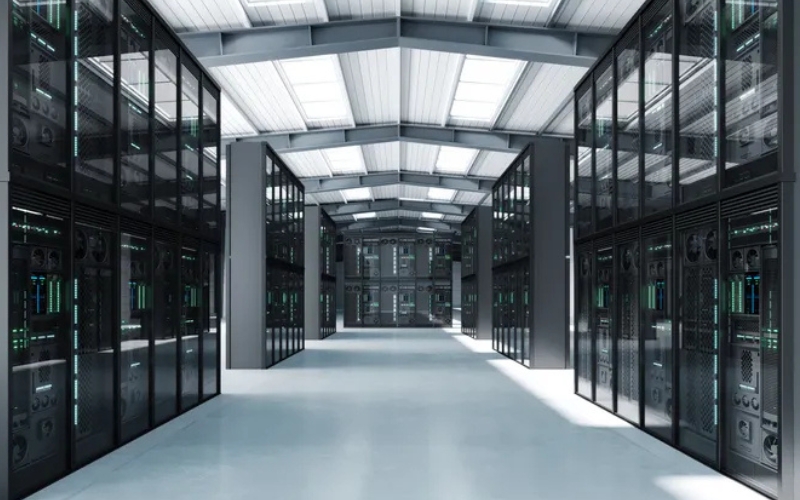
Enterprise and colocation facilities in the 1 to 20 MW range host from a few racks to roughly a hundred racks of current AI hardware. That sounds small until you compare it with the rest of the building. The typical modal rack density just crossed 11 kW for the first time in 2026, so one 132 kW GB300 rack draws as much as about 12 ordinary racks.
In a colocation hall, power per row now limits revenue far more than square footage. Selling AI space means selling power density, not cages.
Hyperscale data centers

A standard hyperscale data center in the 50 to 300 MW range supports roughly 180 to 1,900 rack-scale AI systems. At this size, operators run cooling on dedicated facility water loops and tune PUE closer to 1.2. That efficiency gap versus smaller sites translates directly into more GPUs per megawatt.
Frontier AI mega-campuses
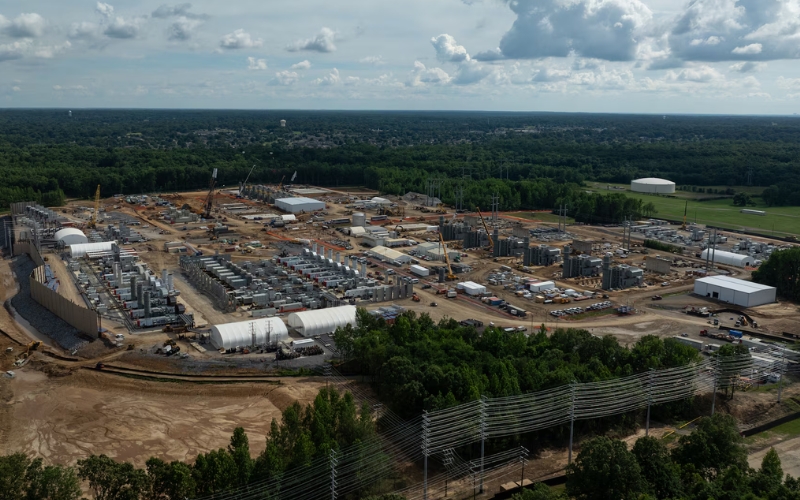
Frontier AI mega-campuses at 1 to 3 GW host hundreds of thousands of GPUs, and the largest plans push past a million. The largest planned site Epoch AI tracks, Microsoft Fairwater Wisconsin, targets about 2,263 MW of IT power by 2028. At a PUE of 1.2, that’s roughly 2.7 GW of total facility power at a single campus.
How much energy does cooling use at each facility scale?
Cooling and other non-IT systems use about 29% of total facility power at a PUE of 1.4 and about 17% at a PUE of 1.2. In plain terms, a 20 MW colocation site at PUE 1.4 spends 5.7 MW on everything besides IT, while a 300 MW hyperscale site at PUE 1.2 spends 50 MW.
Most of the industry still sits well above the best AI designs. The 2026 industry-wide average PUE was 1.52, falling to 1.36 when weighted by capacity since larger facilities run more efficiently. Globally, cooling and other infrastructure account for about 195 TWh of the estimated 565 TWh data centers will use in 2026, roughly 35%.
Why do data center cooling requirements look so different for AI?
Data center cooling requirements look different for AI because the heat is concentrated in a tiny footprint. Each advanced AI rack must reject heat equivalent to about 30 natural gas boilers, according to the International Energy Agency’s 2026 analysis. Air cannot carry that much heat away from a cabinet the size of a refrigerator.
That’s why liquid cooling is now mandatory at the top end. GB300 racks use cold plates on CPUs and GPUs, with HPE’s in-row coolant distribution unit rated at 1.3 MW and serving up to eight racks. Schneider Electric’s Vera Rubin design pairs racks with a 2.5 MW coolant distribution unit.
The newest designs also change the cooling plant itself. Vera Rubin trays are fully liquid cooled with no fans, and with coolant entering at 45°C or below, the system is designed to run on a heat exchanger without chillers. Fewer chillers mean less cooling power, less water, and a lower PUE.
What does this mean for crypto miners converting to high-performance computing?
If crypto mining halls were built around air-cooled ASIC rows, the cooling plant is usually the biggest rebuild in a conversion. The substation and interconnection may carry over. But GPU racks need liquid loops, coolant distribution units, and heat rejection sized for 130 to 230 kW per rack.
How much energy do support systems use at each facility scale?
Support systems use the power that goes to everything besides GPUs and cooling: CPU racks, storage, networking, power conversion, backup equipment, and building controls. Most of it appears inside the IT load, but they still shape how much electrical capacity is needed to build.
Let’s start with the IT side. NVIDIA’s Vera Rubin platform ships as five rack types, including Vera CPU racks with 256 CPUs, BlueField-4 STX storage racks, and Spectrum-6 SPX Ethernet racks alongside the GPU racks. Every one of those draws power without adding a single GPU to the count.
Next comes the electrical chain. Today’s racks typically convert 415 V or 480 V AC into 48 to 54 V DC inside the rack. Every conversion stage loses some energy as heat. The industry is moving toward 800 V DC distribution to cut those stages and the thick copper they require, starting with “sidecar” racks that feed power to neighboring compute racks.
Then there’s the headroom problem. A GB300 rack rated at 132 kW nominal can peak near 155 kW, about 17% higher. If the electrical gear is rated for nominal load only, a full hall running hard can exceed what the switchgear and backup systems were built to carry.
What are the total estimated energy requirements per facility scale?
Running flat out for a full year, estimated annual energy use looks like this:
- Enterprise or colocation facility: about 8.8 to 175 GWh
- Hyperscale data center: about 438 GWh to 2.6 TWh
- Frontier AI mega-campus: about 8.8 to 26 TWh
Real consumption typically runs below these figures because facilities don’t sit at full load around the clock. Still, full-load numbers are the right starting point for AI data center power requirements because utilities and generation suppliers size their commitments around the peak, not the average.
How does AI data center energy usage compare to household electricity use?
AI data center energy usage at frontier scale rivals the demand of a large city. U.S. homes averaged 1,074 kWh per month during summer 2026, which works out to an average draw of roughly 1.47 kW per home. Using that summer figure, every 1 MW of continuous data center load equals about 680 homes.
Scale that up and the numbers get big fast. A 1 GW campus draws as much power as 680,000 homes at peak summer use and more than the roughly 800 MW the city of San Diego draws on average. By 2027, a single advanced server rack could hit peak demand equal to about 65 households.
Why does this comparison matter beyond the headline? Because households vote and local opposition increasingly shapes which sites get power. The more an AI project looks like a flexible, self-supplied neighbor instead of a new drain on the grid, the easier it is to get approvals.
How do AI data centers get power?
AI data centers get power from three sources, usually in combination: a grid interconnection, on-site generation, and battery storage. The mix depends on how fast a site needs power, its size, and what the local grid operator will approve.
Grid supply and interconnection
Grid interconnection is still the default way AI data centers get power, but in 2026 regulators in the U.S., Europe, and Asia began rationing it. The rules differ by region, but the direction is the same everywhere. Projects that bring their own generation, accept flexibility, or prove readiness move to the front of the line.
United States
On June 18, 2026, the Federal Energy Regulatory Commission issued show cause orders to all six regional grid operators under its jurisdiction, giving them 60 days to justify or reform how they connect large loads. The reforms cover faster study processes, cost transparency, co-location and behind-the-meter generation, and new transmission services for flexible large loads.
Texas moved the same day. The Public Utility Commission of Texas approved ERCOT’s Batch Zero process, which studies qualified projects of 75 MW or more as a group instead of individually. ERCOT is tracking more than 438,000 MW of large-load requests, nearly 89% from data centers. The framework also creates connection pathways for sites that self-supply with onsite generation and for sites that accept curtailment during local transmission constraints.
Europe
Europe wants much more data center capacity and plans to tie grid access to readiness and flexibility. The European Commission’s proposed Cloud and AI Development Act, published in June 2026, aims to triple EU data center capacity within five to seven years. It would require member states to designate data center acceleration zones with clear grid connection procedures and flexible connection agreements. It also builds on the European Grids Package, which shifts connection queues from pure first-come, first-served toward project readiness and grid-friendly use. The act is still a proposal, so final rules may change during negotiations.
Ireland shows where that pressure leads. Data centers used 7,663 GWh in 2025, or 23% of Ireland’s metered electricity, up from 5% in 2015. In response, EirGrid’s Data Centre Connection Offer Process and Policy Version 3, published in May 2026, reopened the grid with strict conditions. New data centers must bring dispatchable onsite or nearby generation or storage matching their maximum import capacity. They must also show a path to matching at least 80% of annual demand with new renewables. Where the associated generation still needs its own connection offer, processing can take up to 18 months.
Asia
Asia’s leading hubs allocate power in small, conditional blocks. Singapore provisionally allocated 200 MW of new capacity in August 2026, split evenly among Digital Realty, Equinix, Keppel Data Centres, and ST Telemedia Global Data Centres. Each winner committed to power more than half its capacity from green energy sources and to adopt liquid cooling. All four will build on Jurong Island. Another allocation round will be reviewed in 18 to 24 months.
Malaysia, the region’s fastest-growing market, is pausing to check its supply. In October 2026, the government held off on 24 new data center applications while assessing whether electricity supply can meet the needs of 117 approved projects. Malaysia’s Energy Commission projects data centers could represent 31% of Peninsular Malaysia’s electricity demand by 2035. The government also signaled that data center investors will bear the cost of transmission upgrades for very large power requests.
Onsite generation
Onsite generation, mostly natural gas, fills the gap when the grid can’t deliver on time. Between 15 and 27 GW of onsite gas capacity could supply data centers globally by 2030, mostly in the U.S. Gas turbine orders tied to data centers rose about 70% in 2025.
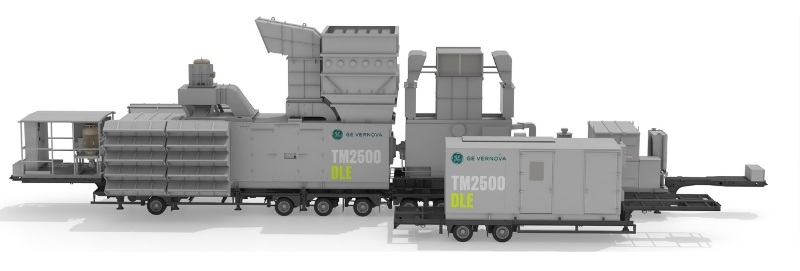
The catch is equipment. GE Vernova’s gas power backlog and slot reservations grew from 116 GW to 122 GW in the third quarter of 2026, with at least 130 GW under contract expected by year-end. This creates a long line for anyone without a reserved slot.
Timing turbine procurement is now a critical-path decision, covered in detail in our guide to extended gas turbine procurement lead times. It’s also why Acquire.Fi runs a Private Gas Turbine Market, working with builders sourcing generation and compute for new AI projects.
Battery storage
Battery storage handles a problem unique to AI: large, rapid swings in power draw during training and inference. Around 20 to 25 GW of battery storage could be installed in data centers globally by 2030, based on International Energy Agency projections. With the right incentives, batteries can also turn data centers into useful grid assets.
The projects are getting huge. Google and Xcel Energy agreed to deploy a 300 MW, 30 GWh iron-air battery system in Minnesota, built with Form Energy’s 100-hour technology and paired with 1.6 GW of new renewables. Multi-day storage like this lets data centers lean on wind and solar without giving up round-the-clock uptime.
How do AI data centers handle load flexibility and demand response?
AI data centers handle load flexibility by slowing, pausing, or relocating workloads and by leaning on batteries and on-site generation when the grid is stressed. In return, they can often connect faster and to more capacity. Flexibility has quickly become a bargaining chip, not a sacrifice.
The economics are compelling. Cutting data center peak demand by 1% to 2% could lower electricity rates by 0.5% to 2.8%, based on a 2026 Duke University study. The Electric Power Research Institute sorts data center flexibility into five classes, from rare emergency support to fast frequency response, based on notice time, duration, frequency, and depth.
Field tests back it up. Here are the results operators and investors are watching:
- In a peer-reviewed test at Salt River Project in Arizona, an AI cluster cut power 25% for three hours during peak demand.
- Electric Power Research Institute demonstrations with Emerald AI software have delivered flexibility of up to 40%.
- In Boston University modeling, training and inference workloads flexed 18% to 55% of average power while still meeting service requirements.
- The Electric Power Research Institute, NVIDIA, and Emerald AI plan to bring the 96 MW Aurora AI Factory online in Manassas, Virginia, in late 2026 to validate flexibility at scale.
NVIDIA is building flexibility into the hardware stack too. With the Vera Rubin launch, NVIDIA introduced DSX Max-Q for dynamic power provisioning, designed to fit up to 30% more AI infrastructure into a fixed-power data center. Its DSX Flex software aims to turn AI factories into grid-flexible assets, with a stated goal of unlocking up to 100 GW of stranded grid power.
What should colocation builders, miners, and investors do next?
If you’re an AI company or a firm funding it, you should price every deal and expansion plan in megawatts first and GPUs second. Power sets the ceiling on everything else, and the tools to stretch that ceiling (flexibility, onsite generation, storage) now carry real value of their own.
Here’s how to put that into practice:
- Translate GPUs into megawatts before you sign anything. Use 2.2 to 4.4 kW of facility power per GPU as a planning range, then refine it with your actual rack platform and PUE.
- Provision for peak, not nominal. Size switchgear, transformers, and backup systems for the roughly 17% gap between nominal and peak rack draw.
- Lock in your power path early. Secure your queue position, reserve turbine slots if you need bridge power, and scope storage before your GPUs ship.
- Treat flexibility as an asset. Document how much load you can curtail, how fast, and for how long, then bring that to the utility table.
AI data center energy demand isn’t slowing down, and the sites that can energize fastest will capture the most value from it. For a wider view of the obstacles ahead, read our analysis of AI infrastructure challenges.
If you’re building a new AI data center or converting a powered site, Acquire.Fi can connect you with sellers of gas turbine gen sets and Nvidia GPUs. Reach out to our team and submit your power and compute requirements for your next AI project.
Sources
- Gartner Says Data Center Electricity Consumption to Grow 26% in 2026 - https://www.gartner.com/en/newsroom/press-releases/2026-06-10-gartner-says-data-center-electricity-demand-to-grow-26-percent-in-2026
- Largest AI data centers ranked by power capacity, 2026 - https://epoch.ai/graphs/largest-ai-data-centers-by-power-capacity
- NVIDIA GB300 NVL72 by HPE QuickSpecs - https://www.hpe.com/us/en/collaterals/collateral.a50009244enw.html
- NVIDIA and Schneider Electric get in sync at NVIDIA GTC 2026 to deliver Vera Rubin AI Factories - https://blog.se.com/datacenter/2026/05/08/nvidia-and-schneider-electric-get-in-sync-at-nvidia-gtc-2026-to-deliver-vera-rubin-ai-factories/
- It’s official - more IT work is now off-prem than ever before, and it’s sucking up a whole load of power - https://techradar.com/pro/its-official-more-it-work-is-now-off-prem-than-ever-before-and-its-sucking-up-a-whole-load-of-power
- The growing PUE advantage of larger data centers - https://intelligence.uptimeinstitute.com/resource/growing-pue-advantage-larger-data-centers
- Behind the scenes at Nvidia’s Engineering SuperLab - Vera Rubin NVL72 running OpenAI workloads, 800VDC demonstrated, and more - https://www.tomshardware.com/tech-industry/artificial-intelligence/behind-the-scenes-at-nvidias-engineering-superlab-vera-rubin-nvl72-running-openai-workloads-800vdc-demonstrated-and-more
- Table SF02. Average Summer (June, July, and August) Residential Electricity Usage, Prices and Monthly Bills - https://www.eia.gov/outlooks/steo/tables/pdf/SF02.pdf
- Fact Sheet | FERC Takes Action to Supercharge America’s Grid for Efficiency, Reliability, and a Bold Energy Future - https://ferc.gov/news-events/news/fact-sheet-ferc-takes-action-supercharge-americas-grid-efficiency-reliability-and
- PUCT Approves ERCOT’s Batch Zero Process for Connecting Large Electricity Users While Protecting System Reliability for Texans - https://www.ercot.com/news/release/06182026-puct-approves-ercots
- AI’s energy appetite is outpacing deployment of AI-based climate solutions: IEA - https://www.eco-business.com/news/ais-energy-appetite-is-outpacing-deployment-of-ai-based-climate-solutions-iea/
- GE Vernova reports strong third quarter 2026 financial performance, raises 2026 guidance, and increases share repurchase authorization - https://www.gevernova.com/news/ge-vernova-reports-strong-third-quarter-2026-financial-performance
- Google to deploy world’s largest iron-air battery for Minnesota data center - https://pv-magazine-usa.com/2026/02/24/google-to-deploy-worlds-largest-iron-air-battery-for-minnesota-data-center/
- Data centers are ready to negotiate flexibility for speed - https://www.utilitydive.com/news/data-centers-flexibility-utilities-speed-to-power/822588/
- NVIDIA Vera Rubin Opens Agentic AI Frontier - https://investor.nvidia.com/news/press-release-details/2026/NVIDIA-Vera-Rubin-Opens-Agentic-AI-Frontier/