
Key takeaways:
- The Wartsila 20V34SG is a 20-cylinder, spark-ignited gas generating set rated at 9,795 kW (50 Hz) and 9,388 kW (60 Hz). Wartsila publishes 48.9% electrical efficiency under reference conditions.
- In 2026, Wartsila won its first data center orders for the 34SG, including a 412 MW Ohio project and a €292 million order from Liberty Energy, which pushed its US data center engine sales past 1.6 GW.
- At EIA’s forecast 2026 Henry Hub price of $3.44 per MMBtu, fuel works out to roughly $27 per MWh, or about $2 million per engine per year at 8,000 running hours.
- You need a full gas composition report before you buy, since heavier hydrocarbons can cause knock and impurities can poison catalysts.
- The Jenbacher J920 FleXtra and the Everllence 35/44G are the closest 10 MW-class rivals, while the roughly 4 MW Caterpillar CG260-16 suits plants built from more, smaller units.
- RaboResearch puts all-in gas engine costs at about $1,700 to $2,000 per kW with 12 to 24 month timelines. Wartsila’s 2026 orders, however, show some deliveries already scheduled for 2029 and 2030.
- Preserved or low-hours units from the secondary market can shorten your timeline considerably, but only after independent inspection, hours verification, and a permitting check.
The Wartsila 20V34SG is the largest standard member of the Wartsila 34SG gas engine family, a line of four-stroke, lean-burn generating sets built for power plants. “20V” means 20 cylinders in a V shape. “SG” stands for spark-ignited gas.
Wartsila 20V34SG is like a much larger version of a car engine running on natural gas. Each cylinder mixes gas with surplus air, and a spark ignites it. Running “lean” keeps combustion cooler, which improves efficiency and reduces nitrogen oxide formation.
Twenty cylinders on one crankshaft respond quickly to load changes. That matters for data centers, where load can swing fast.
Wartsila positions the engine for flexible baseload and for balancing renewables. You can buy it as part of a full engineering, procurement, and construction contract or as an equipment-only delivery.
The gas engine's long track record
The Wartsila 34SG is derived from the Wartsila 32 engine, which has been in service since the mid-1990s. Wartsila reports 1,000 generating sets delivered on the 34SG platform.
That history means mature parts supply and many trained technicians. That is the kind of track record lenders look for when financing a behind-the-meter plant.
Where is the Wartsila 20V34SG used, and which deployments stand out?
The Wartsila 20V34SG runs in utility plants, mines, and cogeneration sites. In 2026, it also won its first hyperscale AI data center orders.
AI data centers and hyperscale campuses
In April 2026, Wartsila announced a 412 MW order for a hyperscale data center in Ohio built around 40 Wartsila 34SG engines. It marked the first data center use of the 34SG model. The plant will serve as primary power so the campus can run off-grid, with commercial operation targeted for early 2028.
With that order, Wartsila’s engine capacity sold to US data centers topped 1.6 GW, spread over four separate projects. In June 2026, Denver-based Liberty Energy placed a €292 million order for 34SG engines to supply AI data center development, with deliveries planned for 2029 and 2030.
Wartsila’s half-year 2026 financial report says second-quarter Energy orders beat the previous record by more than 70%, driven largely by 1.2 GW of firm data center orders.
Mining and remote industry
Wartsila supplied six 20V34SG engines, totaling 53 MW, to the McArthur River zinc mine in Australia. The mine’s operator, EDL, keeps the plant running through severe heat with maintenance scheduled by actual engine condition rather than fixed calendar dates.
What does a zinc mine have to do with a data hall? Both run around the clock and punish downtime.
Utilities and cogeneration
Wartsila also lists 34SG customers such as Paras Energy in Nigeria and the Makuhari trigeneration plant in Japan. Trigeneration means one plant supplies power plus heating and cooling, a model colocation builders can borrow directly.
Which Wartsila 34SG model variants can you choose from?
Wartsila lists the 34SG in three V-configurations covering roughly 5.6 to 9.8 MW per unit, plus specialized versions.
- Wartsila 12V34SG: 5,840 kW at 50 Hz and 5,580 kW at 60 Hz.
- Wartsila 16V34SG: 7,830 kW at 50 Hz and 7,491 kW at 60 Hz.
- Wartsila 20V34SG: 9,795 kW at 50 Hz and 9,388 kW at 60 Hz.
- Wartsila 20V34SG power optimized: a higher-output version rated at 10,777 kW (50 Hz) with 47.6% efficiency.
- Wartsila 34SG-LPG: a variant designed to run on propane for sites without pipeline gas.
Running 24/7? The standard 20V34SG burns less fuel per MWh. For peaking or tight footprints, the power-optimized version may be more cost-effective.
What are the Wartsila 20V34SG technical specifications?
The Wartsila 20V34SG uses a 340 mm bore and a 400 mm stroke, and it runs at 750 rpm (50 Hz) or 720 rpm (60 Hz).
- Rated electrical power: 9,795 kW (50 Hz) and 9,388 kW (60 Hz).
- Electrical efficiency: 48.9% (50 Hz) and 48.8% (60 Hz).
- Heat rate: 7,363 kJ/kWh (50 Hz) and 7,374 kJ/kWh (60 Hz).
- Grid connection: 30 seconds from start.
- Full load: under 2 minutes with fast start and under 5 minutes with regular start.
- Hot ramp rate: more than 100% of load per minute.
- Minimum load: 10% per unit and 1% at plant level.
Wartsila 34SG electrical efficiency in real-world terms
Wartsila measures the 34SG electrical efficiency at the generator terminals under reference conditions: 100 kPa pressure, 25°C intake air, and 30% humidity. The company states a 5% tolerance and notes that site conditions, fuel, and emission limits can affect results.
Treat 48.9% as a ceiling, not a promise, as heat and altitude can lower real numbers.
Why start-up speed matters for your load
The 1% plant-level minimum load is useful for AI campuses, where training clusters swing between full draw and idle. Wartsila also says the 34SG has no start cost and no degradation from frequent starts.
What fuel does the Wartsila 20V34SG need?
The Wartsila 20V34SG runs on natural gas, biogas, and synthetic methane. The gas engine is also capable of hydrogen blending.
Gas quality and knock resistance
Spark-ignited engines are sensitive to “knock,” which is uncontrolled combustion that stresses pistons and cylinder heads. Gas rich in propane or butane knocks more easily. Engineers rate this with a methane number, and Wartsila offers a public methane number calculator you can use with your gas analysis.
Get a full gas composition report before signing. Field gas may require treatment or an output derate.
Contaminants and catalysts
Wartsila warns that certain fuel components can poison catalysts, so their levels must be limited. Sulfur compounds and siloxanes in biogas are classic culprits, so budget for gas cleanup early.
Gas volume and pressure
At full load, one 60 Hz Wartsila 20V34SG burns about 72 MMBtu of gas per hour. Multiply that by 40 engines, and you see why pipeline negotiations often outlast the engine order.
How clean is the Wartsila 20V34SG?
A Wartsila 20V34SG on pipeline gas emits roughly 410 kg of CO2 per MWh at its rated heat rate. That estimate applies the US Energy Information Administration’s natural gas emissions coefficient of 52.91 kg of CO2 per MMBtu, after converting Wartsila’s heat rate to a higher heating value basis.
Nitrogen oxides and your permit
Your air permit will focus on nitrogen oxides, carbon monoxide, and volatile organic compounds. In the United States, new stationary spark-ignition engines fall under 40 CFR Part 60, Subpart JJJJ. It sets emission standards and record-keeping duties for owners and operators, and states often add tighter limits.
In the European Union, the Medium Combustion Plant Directive (EU) 2015/2193 covers plants from 1 MW to under 50 MW of thermal input. Larger aggregated plants fall under the Industrial Emissions Directive instead. Wartsila designs catalyst systems project by project to meet whichever limits apply.
Water use
Wartsila highlights minimal water consumption for the 34SG. In Wartsila’s September 2026 data center analysis, Energy President Anders Lindberg flags heavy process-water use as a permitting hurdle in water-stressed regions.
What does it cost to run a Wartsila 20V34SG?
Fuel dominates the operating cost of a Wartsila 20V34SG. At 2026 US gas prices, it costs roughly $27 per MWh before pipeline charges.
The fuel math
The US Energy Information Administration’s August 2026 Short-Term Energy Outlook forecast a 2026 Henry Hub average of $3.44 per MMBtu. Using the 60 Hz heat rate (about 7.74 MMBtu per MWh on a higher heating value basis), fuel costs about $26.60 per MWh.
Run one engine at full output for 8,000 hours a year to produce about 75,000 MWh. That means roughly $2.0 million in fuel per engine per year before transport charges, so treat it as a floor.
Non-fuel costs to budget
Plan for these recurring costs too.
- Scheduled maintenance: ignition parts, valves, and turbocharger work under your service agreement.
- Lubricating oil: consumption varies with load profile and engine condition.
- Aftertreatment consumables: urea for nitrogen oxide control and periodic catalyst replacement.
- Staffing, insurance, and spares: especially important for critical-uptime loads.
How on-site power compares with the grid
RaboResearch’s May 2026 study of US data center power estimates behind-the-meter gas generation at $100 to $165 per MWh, versus $90 to $95 for grid alternatives. That premium sounds steep until you consider idle GPUs. RaboResearch notes electricity makes up just 10 to 15% of data center ownership costs, yet without it the facility earns nothing.
How do you maintain a Wartsila 20V34SG, and what usually goes wrong?
Many Wartsila 20V34SG plants, including the McArthur River mine, run under long-term service agreements based on condition-based maintenance. Wartsila says the 34SG offers longer maintenance intervals, though actual intervals depend on your duty cycle and fuel.
The lifecycle service model
In an October 2026 article on lifecycle services, Wartsila describes a remote operations center in Houston that analyzes performance data and flags likely component failures early.
Many data center owners run engine plants for the first time. A partner who knows your plant shortens that learning curve, which beats learning through outages.
Common issues to watch for
These problems show up across large spark-ignited engines, and good fuel management reduces many of them.
- Knock from gas quality swings: heavier hydrocarbons can cause the control system to cut output.
- Ignition wear: worn spark plugs and pre-chambers can cause misfires and efficiency loss.
- Catalyst poisoning: fuel impurities can degrade aftertreatment and push emissions out of compliance.
- Heat and altitude derating: hot or thin air reduces output, so size your plant for summer peaks.
- Turbocharger fouling: poor intake filtration lowers efficiency and can shorten turbocharger life.
Which safety standards apply to a Wartsila 20V34SG installation?
A Wartsila 20V34SG plant must meet fire, fuel gas, and explosion-protection rules in your jurisdiction. These frameworks come up most often.
- NFPA 37 (United States): the National Fire Protection Association standard for installing and using stationary combustion engines and gas turbines.
- NFPA 54 (United States): the National Fuel Gas Code for gas piping downstream of the meter.
- ATEX equipment directive (European Union): Directive 2014/34/EU covers equipment used in potentially explosive atmospheres.
- Hazardous area classification: zones around gas regulating units need formal classification and gas detection.
Bring your insurer and local fire authority in early. They may add requirements, such as separation distances, that no datasheet mentions.
How does the Wartsila 20V34SG compare with the Jenbacher J920 FleXtra, Everllence 35/44G, and Caterpillar CG260?
The Wartsila 20V34SG and the Jenbacher J920 FleXtra both sit in the 10 MW class. So does the 20-cylinder Everllence 35/44G. The Caterpillar CG260-16 is a smaller unit at about 4 MW, so you would need more than twice as many to match the output.
Wartsila 20V34SG vs Jenbacher J920 FleXtra
These two are the closest head-to-head rivals. The J920 FleXtra offers more output at 50 Hz and uses two-stage turbocharging, which Jenbacher says avoids derating at higher altitudes. In cogeneration mode, Jenbacher cites total efficiency of about 94%.
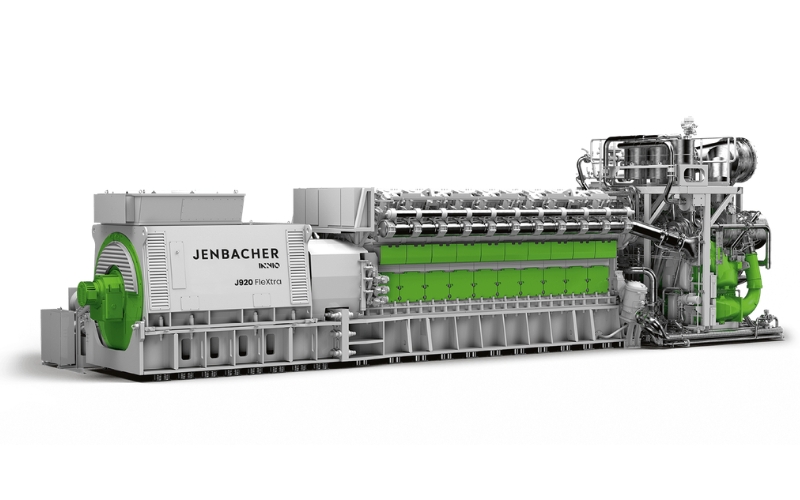
The Wartsila 20V34SG holds a narrow edge in published electrical efficiency and publishes a 1% plant-level minimum load. Your choice often comes down to delivery slots, local service coverage, and whether you can sell heat.
Wartsila 20V34SG vs Everllence 35/44G
Everllence (formerly MAN Energy Solutions) rates each 35/44G cylinder at as much as 640 kW. Its two-stage 20-cylinder version tops 12 MW of shaft power. Everllence quotes mechanical output, so electrical output at the generator terminals will be lower.
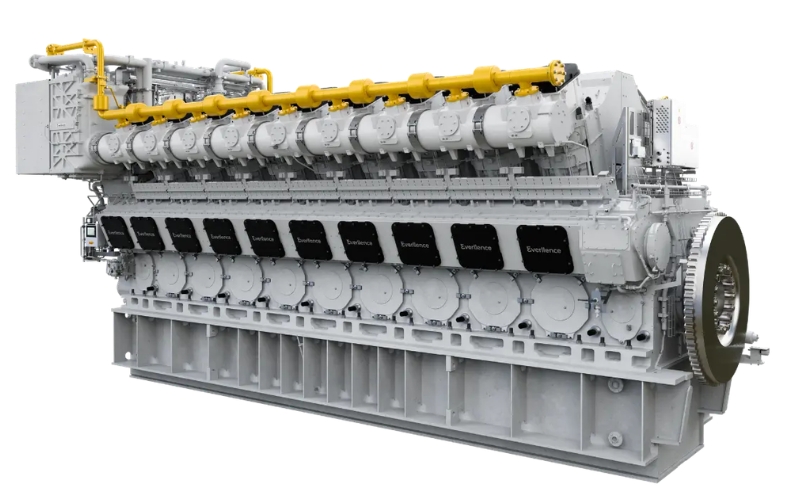
In Stuttgart, utility EnBW operates a combined heat and power plant with three 20V35/44G engines, rated at 31.2 MW electric and as much as 30 MW of heat for the city network. If hydrogen readiness is a board-level requirement, Everllence’s stated 25% hydrogen capability for its two-stage engines deserves a close look.
Wartsila 20V34SG vs Caterpillar CG260
The Caterpillar CG260-16 runs at 1,000 rpm (50 Hz) and produces less than half the output with a peak efficiency of 44.1%. On the plus side, Caterpillar advertises a general overhaul only after 80,000 operating hours and about 30% lower lube oil use than comparable gensets.
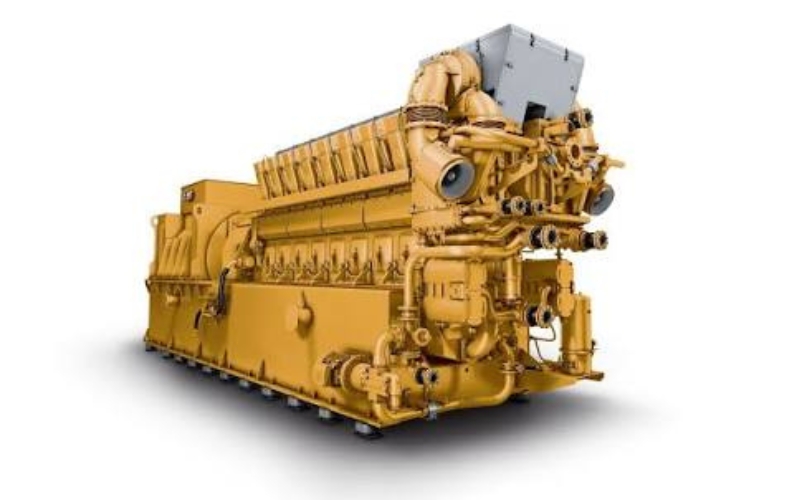
Caterpillar also has a strong data center foothold. In March 2026, developer Nscale picked Caterpillar for the 2 GW on-site power plan at its Monarch campus in West Virginia. Just remember that every extra engine adds maintenance work.
What is the Wartsila 20V34SG price and lead time in 2026?
Wartsila does not publish list prices for the 20V34SG. Independent research provides a starting range.
Price signals you can use
RaboResearch estimates all-in capital costs for gas reciprocating engines at roughly $1,700 to $2,000 per kW, including typical balance of plant and commissioning. That range reflects 2.5 MW-class engines, so a 10 MW-class plant may differ.
The €292 million Liberty Energy order is another signal, although its capacity was not disclosed.
Lead times for new units
RaboResearch estimates 12 to 24 months from firm order to commercial operation for gas engines. Heavy-duty turbines and combined-cycle plants take 36 to 84 months. The two 2026 Wartsila data center orders hint at how the delivery queue is moving.
- The Ohio order, booked in the second quarter of 2026, targets commercial operation in early 2028.
- The Liberty Energy order, expected to be booked in the third quarter of 2026, schedules deliveries from 2029 through 2030.
If you need power in 2027, a new-build slot ordered today may be too late.
How do you buy a low-hours or refurbished Wartsila 20V34SG?
The quickest path to a low-hours or refurbished Wartsila 20V34SG runs through the resale market, where preserved sets from stalled projects and engines from closed industrial sites often change hands privately. The Acquire.Fi Gas Turbine Order Book is one channel built for this.
How the order book process works
Acquire.Fi matches parties instead of posting listings, and it describes five stages.
- Submit a brief: State the output, frequency, engine count, site, and target date in a short, non-binding form. Nothing is published, and posting is free.
- Clear the credentials check: Our team verifies the identity and mandate of each party, then searches our listings and unlisted holders. We aim to reply the next business day, including when nothing fits.
- Sign confidentiality terms: After both sides pass screening, a mutual NDA opens the introduction. The owner controls disclosure, sharing the specification pack first and inspection reports and run-hour logs later.
- Test the machine: Your own advisers run an on-site inspection, a borescope check, and independent confirmation of running hours before any contract.
- Paper the deal: Contract, escrow account, and freight arrangements come next. Acquire.Fi stays involved through commissioning and is paid only when the sale completes.
For multi-engine campuses, the we can assemble a matched set of 5 to 10 units from several sellers. Identities stay private until both sides approve an introduction.
Owner-reported specifications, hours, and condition get tested only in due diligence, so treat them as unconfirmed until your inspector signs off.
What to verify on a used 34SG
- Nameplate frequency: The 20V34SG runs at 750 rpm for 50 Hz and 720 rpm for 60 Hz, so confirm which version you are buying.
- Hours against records: Match operating hours and starts to the maintenance history.
- Preservation proof: Idle engines should come with preservation records.
- Scope of supply: Confirm whether the generator, controls, and catalyst system are included.
- Service eligibility: Ask Wartsila or a qualified provider whether the engine can join a service agreement.
- Permit fit: State guidance on Subpart JJJJ explains how construction and reconstruction dates affect which rules apply.
Walk away from missing records, no preservation proof, or a seller who refuses independent inspection. A low price with vague history is often bullshit dressed up as a bargain.
What should you do next?
The Wartsila 20V34SG matters beyond this year’s procurement cycle. Engines installed as bridge power can later shift to backup duty or grid balancing once a utility connection arrives. And because the 34SG platform accepts biogas and hydrogen blends, the same asset has room to evolve as fuel markets change.
Lock down your gas supply and air permit first, since those can take as long as the engines. Then pursue two tracks: request a new-build quote from Wartsila and explore the secondary market for units that could energize your site sooner.
To see what is available today, you can post your requirement on the Acquire.Fi order book in about two minutes, at no cost. Our energy desk works requirements against inventory that is often not publicly listed, which can surface matched fleets of identical units when your project needs more than one engine.
Sources
- Wärtsilä 34SG gas engine for power plants - Wärtsilä Energy - https://www.wartsila.com/energy/solutions/engine-power-plants/wartsila-34sg-gas-engine
- Wärtsilä 34SG power optimised gas engine for power plants - Wärtsilä Energy - https://www.wartsila.com/energy/solutions/engine-power-plants/wartsila-34SG-power-optimised-gas-engine
- Wärtsilä’s 34SG engine makes its data center debut with new 412 MW U.S. project - https://www.wartsila.com/media/news/16-04-2026-wartsila-s-34sg-engine-makes-its-data-center-debut-with-new-412-mw-u-s-project-3740972
- Wärtsilä secures new order to power next wave of AI-driven data center growth in the U.S. - https://www.wartsila.com/media/news/29-06-2026-wartsila-secures-new-order-to-power-next-wave-of-ai-driven-data-center-growth-in-the-u-s--3767555
- Wärtsilä’s Half-year Financial Report January–June 2026 - https://www.wartsila.com/media/news/21-07-2026-wartsila-s-half-year-financial-report-january-june-2026-3773763
- Powering the digital frontier: unlocking power for data centre growth - https://www.wartsila.com/insights/article/powering-the-digital-frontier-unlocking-power-for-data-centre-growth
- Powering what comes next: moving beyond “break-fix” to lifecycle services - https://www.wartsila.com/insights/article/powering-what-comes-next-moving-beyond-break-fix-to-lifecycle-services
- Wärtsilä Methane Number Calculator - https://www.wartsila.com/marine/products/gas-solutions/methane-number-calculator
- J920 FleXtra | 10MW Gas Engine | Products | Jenbacher - https://www.jenbacher.com/en/gas-engines/type-9/j920-flextra/
- V35/44G fact sheet - Everllence - https://www.everllence.com/docs/default-source/energy-factsheets/evr-000011en_l3_v35-44g_preview.pdf?sfvrsn=78d30ba6_4
- Industrial gas engines for power plants | Everllence - https://www.everllence.com/energy/products/gas-fuel-engines
- CG260-16 | 2800kW-4000kW Gas Generator | Cat | Caterpillar - https://www.cat.com/en_US/products/new/power-systems/electric-power/gas-generator-sets/15969826.html
- Data center power crunch lifts engines, aeroderivatives into larger role - Power Engineering - https://www.power-eng.com/gas/data-center-power-crunch-lifts-engines-aeroderivatives-into-larger-role/
- Data centers are building a parallel energy system in the US - Rabobank - https://www.rabobank.com/knowledge/d011524694-the-sprint-data-centers-are-building-a-parallel-energy-system-in-the-us
- Short-Term Energy Outlook, August 2026 - U.S. Energy Information Administration - https://www.eia.gov/outlooks/steo/archives/aug26.pdf
- Carbon Dioxide Emissions Coefficients - U.S. Energy Information Administration - https://www.eia.gov/environment/emissions/CO2_vol_mass.php
- 40 CFR Part 60 Subpart JJJJ, Standards of Performance for Stationary Spark Ignition Internal Combustion Engines - eCFR - https://www.ecfr.gov/current/title-40/chapter-I/subchapter-C/part-60/subpart-JJJJ
- NSPS JJJJ Guidance - Kansas Department of Health and Environment - https://www.kdhe.ks.gov/DocumentCenter/View/562/NSPS-JJJJ-Guidance-PDF
- Directive (EU) 2015/2193 on the limitation of emissions of certain pollutants into the air from medium combustion plants - EUR-Lex - https://eur-lex.europa.eu/eli/dir/2015/2193
- Equipment for explosive atmospheres (ATEX) - European Commission - https://single-market-economy.ec.europa.eu/single-market/goods/european-standards/harmonised-standards/equipment-explosive-atmospheres-atex_en